AST05 — Untrusted External Instructions
Severity: High
Platforms Affected: All
Description
Skills routinely reference external documentation — API references, SDK guides, schemas, runbooks — pointing the agent at a URL or remote file to read at runtime. In practice that content becomes part of the skill’s instructions: the agent loads it, trusts it as it trusts the skill, and acts on it with the host agent’s full permissions. Yet unlike the skill package — which can be reviewed, signed, and version- or hash-pinned — this referenced content is mutable, lives outside the trust boundary, and has no equivalent control; it can change at any moment. It can be poisoned by an attacker who owns the external source, or rewritten by the skill’s own author after the skill has passed review — so the skill that was audited is never the skill that actually runs.
Why It’s Unique to Skills
External code dependencies are a known, well-mitigated problem in traditional software — version and hash pinning, lockfiles, signed packages. Textual external dependencies are unique to skills, and inherit none of that framework: there is no field to pin a document’s hash, no lockfile for prose, and signing the skill says nothing about what a URL returns at runtime. And unlike a library’s documentation — which humans read as reference — a skill’s referenced text is consumed as instructions, not data: followed as faithfully as the SKILL.md itself, and executed with the agent’s full permissions.
Real-World Evidence
- Vendor acknowledgment (Anthropic, Agent Skills documentation): Anthropic’s own security guidance warns that “Skills that fetch data from external URLs pose particular risk, as fetched content may contain malicious instructions,” and that “even trustworthy Skills can be compromised if their external dependencies change over time” — the platform vendor documenting both the injection and the rug-pull variants of this exact risk.
- POC for agent takeover using external instructions (Air Security, The Story of Skills (June 22, 2026)): Air’s research shows how a skill pointing to malicious external instructions can lead to full agent compromise.
- Ecosystem-wide measurement of untrusted instruction sources (Air Security, The Circus of Skills (June 24, 2026)): a scan of 142,836 live skills found 17,822 (~12.4%, 6.7M installs) reference at least one external instruction source — unvetted domains, zero-reputation GitHub repos, packages, free-tier hosts — that a reviewer has no good reason to trust won’t turn malicious.
Attack Scenarios
Author Rug-Pull
The author ships a benign skill that points the agent at documentation they control. It passes review and scanning — then, once trusted and deployed, the author edits the referenced document to inject new instructions (exfiltrate a file, auto-approve a command), which every agent running the skill now obeys.
Reviewer Bait-and-Switch
The referenced URL serves clean documentation to reviewers, scanners, and crawlers (keyed on IP, user-agent, or timing) but malicious instructions to live agent runs — so inspecting the link passes while the agent is hijacked.
Transitive Reference Chaining
The referenced document tells the agent to read still more external resources. Because the agent follows references transitively, the attacker need only control a link buried deep in the chain, well past where review stopped.
Preventive Mitigations
- Pin and verify referenced content: record a content hash for every external document a skill references at review time, and re-verify it on every load — refusing content that is unpinned or has drifted from the reviewed version.
- Prefer inlining over fetching: snapshot external documentation into the signed skill package at publish time, so referenced content is reviewable and pinnable. When the content must stay current, deliver updates through a controlled, auto-updating marketplace channel — with its own review and provenance — rather than pointing the skill at an uncontrollable URL.
- Allowlist permitted reference domains: using the OWASP Universal Agentic Skill Format, restrict the external hosts a skill may fetch from to a vetted allowlist of trusted, stable domains and URL globs unlikely to lapse or turn malicious.
- Audit references transitively: follow every reference — including remote ones and the chains they point to — as part of the skill’s attack surface, and make sure they too are vetted, trusted, and reputable.
- Maintain fleet-wide visibility of referenced sources: keep an inventory of which deployed skills fetch from which external sources, so a source that is later compromised, changed, or abandoned can be traced to every affected skill and revoked.
- Rescan continuously: when a skill fetches an external instruction source, treat each scan not as a one-time event but as a snapshot of a mutable state - and rescan often.
OWASP Mapping
- LLM01 (Prompt Injection — indirect)
- LLM03 (Supply Chain)
- CWE-829 (Inclusion of Functionality from Untrusted Control Sphere)
- ASVS V5 (Validation, Sanitization and Encoding)
MAESTRO Framework Mapping
| MAESTRO Layer | Layer Name | AST05 Mapping |
|---|---|---|
| Layer 3 | Agent Frameworks | skill loaders resolve references and follow them as instructions |
| Layer 2 | Data Operations | untrusted external content ingested into the agent’s context |
| Layer 7 | Agent Ecosystem | trust in external documentation sources, hosts, and marketplaces |
| Layer 6 | Security & Compliance | missing integrity verification and provenance for referenced content |
MAESTRO Layer Details
- Layer 3: Agent Frameworks - primary: the skill loader resolves references — including remote and transitive ones — and injects their content into the model as instructions, without treating it as untrusted.
- Layer 2: Data Operations - externally referenced documentation enters the agent’s context as untrusted data and is acted on as instruction (indirect prompt injection).
- Layer 7: Agent Ecosystem - referenced external sources are ecosystem dependencies whose owners can change, lapse, or be compromised (rug-pull, host takeover, dangling reclaim).
- Layer 6: Security & Compliance - no requirement to pin, verify, or attest the integrity of referenced content across its lifecycle.
Cross-References
- AST01 (Malicious Skills): a malicious author can place the payload in referenced content rather than the skill body, so the skill itself stays clean and passes inspection.
- AST02 (Supply Chain Compromise): AST02 covers the code and dependency supply chain, which integrity controls can pin and verify; AST05 covers the documentation a skill points to, which those controls do not reach.
- AST04 (Insecure Metadata): AST04 executes a payload through unsafe parsing of the skill’s own files at load time; AST05 requires no code execution — the agent simply follows instructions in externally referenced text.
- AST07 (Update Drift): AST07 addresses the skill version changing; AST05 is the same drift applied to referenced content, which can change while the skill stays pinned and unchanged.
- AST08 (Poor Scanning): externally referenced content can be absent at scan time or served selectively, widening AST08’s detection gap to content a scanner may never see.
References
- Anthropic: Agent Skills — Security considerations
- Air Security: The Story of Skills
- Air Security: The Circus of Skills
Last updated: June 2026
Example
Put whatever you like here: news, screenshots, features, supporters, or remove this file and don’t use tabs at all.
Leadership & Founding Members
Project Leadership
Current Leaders

Ken Huang



Hammad Atta

Fabio Cerullo

Aonan Guan

Bhavya Gupta

Niv Hoffman

Iftach Orr

Akram Sheriff
AIVSS Distinguished Review Board
The OWASP AIVSS project’s Distinguished Review Board comprises world-renowned cybersecurity leaders, former government officials, and industry pioneers who provide strategic guidance and expert oversight for the AI Vulnerability Scoring System framework. We thank them for their guidance, several of whom have also supported this project’s work.
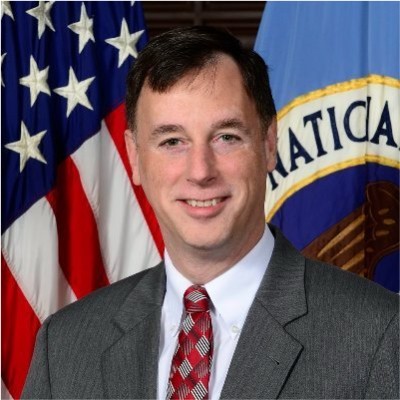
Rob Joyce
Advisor to PwC and OpenAI, Former Special Assistant to the President and Cybersecurity Coordinator

Jason Clinton
Deputy CISO, Anthropic

Amy R. Steagall
Chief Information Security Officer, Stanford University

Martin Stanley
AI Risk Management Framework Lead, NIST

Apostol Vassilev
Research Supervisor, NIST

Andrew Coyne
CISO, Banner Health, Former CISO, Mayo Clinic

Kevin Rocque
Managing Director/Executive Vice President, Global Technology Risk Officer, TD Bank

Jeff Williams
Former Global OWASP Chair, Founder and CTO, Contrast Security

Michael Tran Duff
University Chief Information Security and Data Privacy Officer, Harvard University

Emil Bender Lassen
Standards Lead, AIUC-1
Agentic Skills Top 10 Founding Members
Founding members of the OWASP Agentic Skills Top 10 project itself — project leads, co-leads, and additional contributors — listed alphabetically. Several also contribute to the sibling OWASP AIVSS project listed above.
Ken Huang
Project Lead, Agentic Skills Top 10
Hammad Atta
Co-Lead, Agentic Skills Top 10

Manish Bhatt
Security Researcher, AWS
Fabio Cerullo
Co-Lead, Agentic Skills Top 10

David Girard
Senior Director, AI Security & AI Alliances, Trend Micro
Aonan Guan
Co-Lead, Agentic Skills Top 10
Bhavya Gupta
Co-Lead, Agentic Skills Top 10

Pamela Gupta
Founder & CEO, OutSecure / Trusted AI

Idan Habler
Staff AI/ML Security Researcher, Intuit
Niv Hoffman
CTO, Air Security

Charles Iheagwara
AI/ML Security Leader, AstraZeneca

Sushmitha Janapareddy
Director - Security Integrations, American Express

Edward Lee
Vice President, Lead AI Security, JP Morgan

KJ Lian
Senior Manager, Data & AI (Public Sector), AWS

Vineeth Sai Narajala
Application Security, AWS
Iftach Orr
Co-Lead, Agentic Skills Top 10

Kanna Sekar
Cyber Security, Google
Akram Sheriff
Co-Lead, Agentic Skills Top 10

Dennis Xu
Research VP, AI, Gartner
OWASP AIVSS Founding Members
The OWASP AIVSS (Agentic AI Vulnerability Scoring System) project is a sibling OWASP initiative focused on scoring the severity of agentic AI vulnerabilities. Its founding members are recognized here as OWASP founding members in the agentic AI security space; many of them have also contributed directly to the Agentic Skills Top 10 project’s research and review process.

Sunil Agrawal
Chief Information Security Officer, Glean

David Ames
Partner, PwC

Michael Bargury
Founder and CTO, Zenity

Joshua Beck
Application Security Architect, SAS
Manish Bhatt
Security Researcher, Amazon Kuiper Security

Mark Breitenbach
Security Engineer, Dropbox

Anat Bremler-Barr
Professor of Computer Science, Tel Aviv University

Siah Burke
HIPAA Security Officer, Siah.ai

David Campbell
AI Security, Scale AI

Ying-Jung Chen
AI safety researcher, PhD, Georgia Institute of Technology

Anton Chuvakin
Security Solution Strategy, Google

Jason Clinton
CISO, Anthorphic

Adam Dawson
Staff AI Security Researcher, Dreadnode

Leon Derczynski
Principal Research Scientist, NVIDIA

Walker Lee Dimon
AI Security Researcher, MITRE

Marissa Dotter
AI Security Researcher, MITRE

Dan Goldberg
ISO Market Lead, Omnicom

David Haber
CEO, Lakera
Idan Habler
Staff AI/ML Security Researcher, Intuit

Jason Haddix
Founder, Arcanum Information Security

Keith Hoodlet
Director of AI/ML & AppSec, Trail of Bits

Ken Huang
AIVSS Project Lead, OWASP

Chris Hughes
CEO, Aquia
Charles Iheagwara
AI/ML Security Leader, AstraZeneca

Krystal Jackson
Researcher, Center for Long-Term Cybersecurity, UC Berkeley
Sushmitha Janapareddy
Director - Security Integrations, American Express
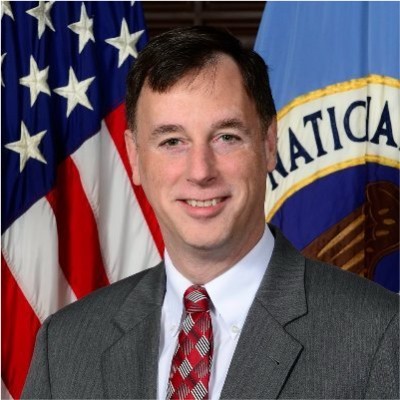
Rob Joyce
Former Cybersecurity Director of NSA, Advisor to PwC, PwC

Diana Kelley
CISO, Noma Security

Prashant Kulkarni
Lead AI Security Research Engineer, Google Cloud

Mahesh Lambe
Founder, MIT, Unify Dynamics
Edward Lee
Vice President, Lead AI Security, JP Morgan

Nate Lee
CEO, Cloudsec.ai

Vishwas Manral
CEO, Precize.ai

Daniela Muhaj
Executive-in-Residence for Research & Development, AI 2030
Vineeth Sai Narajala
Application Security, AWS

Om Narayan
AI Security Researcher, AWS

Varun Pant
Engineering and Product Leader, AI applications at the Automated Reasoning Group, AWS

Advait Patel
Senior Site Reliability Engineer (DevSecOps + Cloud + AIOps), Broadcom, IEEE

Alex Polyakov
CEO, adversa.ai

Ramesh Raskar
Professor & Director, MIT Media Lab

Ron F. Del Rosario
VP-Head of AI Security, SAP

Tal Shapira
Co-Founder & CTO, Reco AI

Akram Sheriff
Senior AI/ML Software Engineering Leader, Cisco

Samantha Siau
Security and Compliance, Anthropic

Kevin Simmonds
Partner on AI Offensive Security, PWC

Martin Stanley
NIST AI RMF Lead, Independent

Omar A. Turner
General Manager of Security, Microsoft

Apostol Vassilev
AI Research Team Supervisor, NIST

Matthew Versaggi
AI Fellow, White House Presidential Innovation Fellow

David Webb
Agency Cybersecurity Officer, Cybersecurity and Infrastructure Security Agency
Dennis Xu
Research VP, AI, Gartner

Xiaochen Zhang
Executive Director and Chief Responsible AI Officer, AI 2030
Recognition
We extend our gratitude to all founding members who have contributed to establishing this crucial framework for AI security assessment. Their vision and dedication have been instrumental in shaping the Agentic Skills Top 10 project.
Get Involved
Interested in contributing to the Agentic Skills Top 10 project? We welcome new contributors and leaders. Please see our Contribution Guidelines for more information on how to get involved.