AST02 — Supply Chain Compromise
Severity: Critical
Platforms Affected: All
Description
Skill registries and distribution channels lack the provenance controls common in mature package ecosystems (npm, PyPI, Cargo). Attackers exploit this absence through coordinated mass uploads, dependency confusion, account takeover, and repository poisoning. Configuration files that were once passive metadata have become active execution paths — the CI/CD pipeline now includes skills as a first-class attack surface.
Why It’s Unique to Skills
The barrier to publishing on ClawHub was a SKILL.md file and a GitHub account one week old. No code signing, no security review, no sandbox by default. Agent skills also inherit execution context from the agent runtime, meaning a compromised skill gains the agent’s full credential set — not just the permissions of a sandboxed package.
Real-World Evidence
- ClawHub: no automated scanning at time of ClawHavoc; publishers could upload unlimited packages.
- Claude Code CVE-2025-59536 / CVE-2026-21852: repository configuration files (
.claude/settings.json, hooks) become execution paths; simply cloning and opening a malicious repo triggers RCE and API key exfiltration before the user sees any dialog. - Dependency confusion: a skill’s
package.jsonorrequirements.txtpulls a typosquatted nested dependency containing the actual payload — the surface skill appears clean. - Snyk-documented attack: skill named “Summarize YouTube Videos” imports
yutube-dl-coreinstead of a legitimate package; nested dependency installs a backdoor. - Trail of Bits (Jun 3, 2026): public skill marketplaces (skills.sh, ClawHub) run a “ship-first, secure-later” model with one-click install and no meaningful vetting — and the scanners meant to backstop them were all bypassed in under an hour (see AST08). Their recommendation is the traditional supply-chain one: curate dependencies in an internal/approved marketplace, pin versions, and control who can publish or update — automated scanning cannot replace that.
- Air Security, The Story of Skills (Jun 22, 2026): a researcher-built malicious skill entered a ~36K-star community plugin marketplace through an accepted pull request, inheriting its stars and credibility; promoted on social media, it reached over 26,000 agents — including corporate ones — while scanners, stars, and reputation all cleared it.
- Air Security, The Circus of Skills (Jun 24, 2026): a scan of 142,836 live skills found 17,822 (~12.4%, 6.7M installs) rest on at least one untrusted external resource — sketchy domains, zero-reputation GitHub repos, freshly published packages, free-tier hosts — each an unpinned dependency that can turn malicious without the skill itself changing.
- Air Security, SkillJacking (Jul 2, 2026): 925 skills serving ~134K agents sit on instantly hijackable sources — deleted GitHub accounts, unregistered packages, expired domains, freed cloud-app slots. Researchers took over the most popular video-generation skill on skills.sh (11,483 installs) by re-registering its deleted owner account; the marketplace listing kept its stars, trust, and installs.
Attack Scenarios
Registry Flooding
Coordinated upload of hundreds of malicious skills to crowd out legitimate alternatives.
Dependency Confusion
Poison a nested dependency, not the top-level skill — bypasses surface-level scans.
Config-File Hijacking
Embed execution instructions in repository config files (hooks, MCP settings, environment overrides) that trigger at project open.
Maintainer Account Takeover
Compromise a trusted skill author’s account, push a backdoored version.
Preventive Mitigations
- Implement skill provenance tracking: link each published skill to a verified code-signing identity, and have the signature cover a canonical digest of
SKILL.mdplus every declared resource file, so any post-publish tampering invalidates it. Standard signing schemes apply (e.g.ES256/ed25519); until skill formats expose a first-class field, the binding can live in theSKILL.mdmetadataextension point. - Require transparency logs for all registry operations (publish, update, delete) — similar to Certificate Transparency.
- Pin all nested dependencies to immutable hashes (
sha256:), not version ranges. - Treat repository configuration files (hooks,
.claude/settings.json,ANTHROPIC_BASE_URL) as executable code and apply trust gates accordingly. - Scan recursive dependency trees, not just top-level skill files.
- Support an internal skill mirror / allowlist for enterprise deployments.
- Provide revocation infrastructure: support revoking a compromised signing key (invalidating every skill signed with it), a single skill version by content digest, or an entire publisher; have hosts consult a revocation endpoint at load time and cache its state within a bounded freshness window.
Code Example: Dependency Pinning
# requirements.txt - BAD (version ranges)
requests>=2.25.0
beautifulsoup4>=4.9.0

# requirements.txt - GOOD (pinned hashes)
requests==2.31.0 --hash=sha256:58cd2187c01e70e6e26505bca751777aa9f2ee0b7b4300988b709f44e013003f996
beautifulsoup4==4.12.2 --hash=sha256:492bbc69dca35d12daac71c4db1bfff0c876c00ef4a2ffacce226d4638eb72da396
Code Example: Transparency Log Verification
import requests
import hashlib

def verify_transparency_log(skill_name: str, expected_hash: str) -> bool:
    """Verify skill exists in transparency log"""
    log_url = f"https://transparency.skillregistry.org/log/{skill_name}"
    response = requests.get(log_url)

    if response.status_code != 200:
        return False

    # Check if our expected hash is in the log
    log_entries = response.json()
    return any(entry['hash'] == expected_hash for entry in log_entries)
Code Example: SKILL.md Integrity Check
import hashlib

def verify_skill_file(file_path: str, expected_hash: str) -> bool:
    """Verify integrity of SKILL.md"""
    with open(file_path, "rb") as f:
        content = f.read()

    actual_hash = hashlib.sha256(content).hexdigest()
    return actual_hash == expected_hash
OWASP Mapping
- LLM03 (Supply Chain)
- ASVS V14.2 (Dependency)
- CWE-494 (Download of Code Without Integrity Check)
MAESTRO Framework Mapping
| MAESTRO Layer | Layer Name | AST02 Mapping |
|---|---|---|
| Layer 7 | Agent Ecosystem | Registry compromise, marketplace manipulation |
| Layer 3 | Agent Frameworks | Compromised components, supply chain attacks |
| Layer 6 | Security & Compliance | Policy enforcement, access controls |
| Layer 4 | Deployment & Infrastructure | IaC manipulation, runtime environment security |
MAESTRO Layer Details
- Layer 7: Agent Ecosystem - primary for registry provenance and marketplace trust.
- Layer 3: Agent Frameworks - supply chain and compromised component risk in skill loaders.
- Layer 6: Security & Compliance - missing governance controls and policy enforcement gaps.
- Layer 4: Deployment & Infrastructure - compromised deployment pipelines enabling poisoned skill updates.
Related Risks
- AST01 — Malicious Skills: Supply chain compromise enables delivery of malicious skills.
- AST05 — Untrusted External Instructions: Externally referenced documentation is a supply-chain surface that code-integrity controls cannot pin or verify.
- AST07 — Update Drift: Lack of immutable updates exacerbates supply chain risks.
- AST08 — Poor Scanning: Inadequate scanning misses supply chain vulnerabilities.
- AST10 — Cross-Platform Reuse: Inconsistent security across platforms creates supply chain gaps.
Reference Materials
Supply Chain Risk Assessment Framework
When evaluating skill supply chain risks, consider these factors:
- Publisher Verification
- Code signing key age and rotation history
- Publisher account creation date and activity patterns
- Cross-reference with known malicious actor databases
- Dependency Analysis
- Complete dependency tree mapping
- Third-party library vulnerability scanning
- License compatibility and compliance
- Registry Security
- Transparency log implementation
- Automated malware scanning
- Two-person rule for emergency updates
Enterprise Supply Chain Controls
For organizations deploying agent skills:
- Private Mirrors: Host approved skills on internal registries
- Automated Scanning: Integrate with existing CI/CD security gates
- Change Management: Require approval for skill updates in production
- Inventory Management: Track all installed skills across the organization
Detection and Response
Supply chain compromise indicators:
- Unexpected skill updates or version changes
- New dependencies in existing skills
- Publisher account changes
- Registry outage followed by rapid updates
- Anomalous download patterns
References
- Snyk ToxicSkills
- Check Point Research: Caught in the Hook
- Antiy CERT: ClawHavoc Campaign Analysis
- OpenAPI Extensions Registry —
x-agent-trust - IETF Internet-Draft —
draft-sharif-agent-payment-trust - JWA
ES256— RFC 7518 §3.1 - Trail of Bits — The Sorry State of Skill Distribution (2026)
- Air Security: The Story of Skills
- Air Security: The Circus of Skills
- Air Security: SkillJacking
Last updated: June 2026
Example
Put whatever you like here: news, screenshots, features, supporters, or remove this file and don’t use tabs at all.
Leadership & Founding Members
Project Leadership
Current Leaders

Ken Huang



Hammad Atta

Fabio Cerullo

Aonan Guan

Bhavya Gupta

Niv Hoffman

Iftach Orr

Akram Sheriff
AIVSS Distinguished Review Board
The OWASP AIVSS project’s Distinguished Review Board comprises world-renowned cybersecurity leaders, former government officials, and industry pioneers who provide strategic guidance and expert oversight for the AI Vulnerability Scoring System framework. We thank them for their guidance, several of whom have also supported this project’s work.
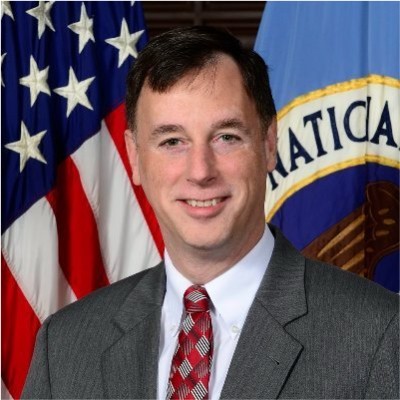
Rob Joyce
Advisor to PwC and OpenAI, Former Special Assistant to the President and Cybersecurity Coordinator

Jason Clinton
Deputy CISO, Anthropic

Amy R. Steagall
Chief Information Security Officer, Stanford University
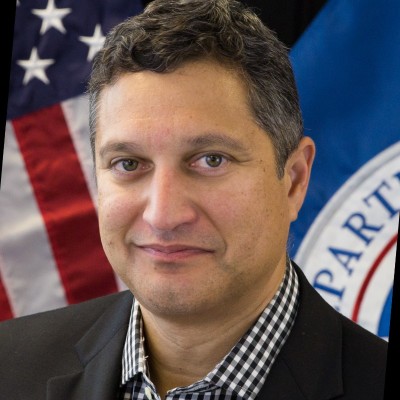
Martin Stanley
AI Risk Management Framework Lead, NIST
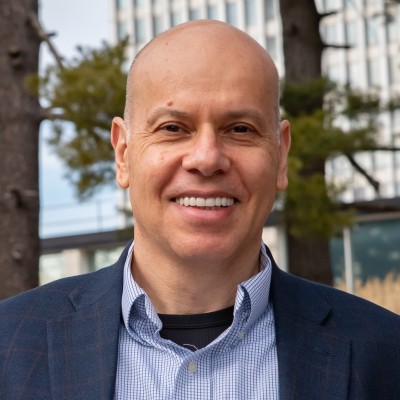
Apostol Vassilev
Research Supervisor, NIST

Andrew Coyne
CISO, Banner Health, Former CISO, Mayo Clinic

Kevin Rocque
Managing Director/Executive Vice President, Global Technology Risk Officer, TD Bank

Jeff Williams
Former Global OWASP Chair, Founder and CTO, Contrast Security

Michael Tran Duff
University Chief Information Security and Data Privacy Officer, Harvard University

Emil Bender Lassen
Standards Lead, AIUC-1
Agentic Skills Top 10 Founding Members
Founding members of the OWASP Agentic Skills Top 10 project itself — project leads, co-leads, and additional contributors — listed alphabetically. Several also contribute to the sibling OWASP AIVSS project listed above.
Ken Huang
Project Lead, Agentic Skills Top 10
Hammad Atta
Co-Lead, Agentic Skills Top 10

Manish Bhatt
Security Researcher, AWS
Fabio Cerullo
Co-Lead, Agentic Skills Top 10

David Girard
Senior Director, AI Security & AI Alliances, Trend Micro
Aonan Guan
Co-Lead, Agentic Skills Top 10
Bhavya Gupta
Co-Lead, Agentic Skills Top 10

Pamela Gupta
Founder & CEO, OutSecure / Trusted AI

Idan Habler
Staff AI/ML Security Researcher, Intuit
Niv Hoffman
CTO, Air Security

Charles Iheagwara
AI/ML Security Leader, AstraZeneca

Sushmitha Janapareddy
Director - Security Integrations, American Express

Edward Lee
Vice President, Lead AI Security, JP Morgan

KJ Lian
Senior Manager, Data & AI (Public Sector), AWS

Vineeth Sai Narajala
Application Security, AWS
Iftach Orr
Co-Lead, Agentic Skills Top 10

Kanna Sekar
Cyber Security, Google
Akram Sheriff
Co-Lead, Agentic Skills Top 10

Dennis Xu
Research VP, AI, Gartner
OWASP AIVSS Founding Members
The OWASP AIVSS (Agentic AI Vulnerability Scoring System) project is a sibling OWASP initiative focused on scoring the severity of agentic AI vulnerabilities. Its founding members are recognized here as OWASP founding members in the agentic AI security space; many of them have also contributed directly to the Agentic Skills Top 10 project’s research and review process.

Sunil Agrawal
Chief Information Security Officer, Glean

David Ames
Partner, PwC

Michael Bargury
Founder and CTO, Zenity

Joshua Beck
Application Security Architect, SAS
Manish Bhatt
Security Researcher, Amazon Kuiper Security

Mark Breitenbach
Security Engineer, Dropbox

Anat Bremler-Barr
Professor of Computer Science, Tel Aviv University

Siah Burke
HIPAA Security Officer, Siah.ai

David Campbell
AI Security, Scale AI

Ying-Jung Chen
AI safety researcher, PhD, Georgia Institute of Technology

Anton Chuvakin
Security Solution Strategy, Google

Jason Clinton
CISO, Anthorphic

Adam Dawson
Staff AI Security Researcher, Dreadnode

Leon Derczynski
Principal Research Scientist, NVIDIA

Walker Lee Dimon
AI Security Researcher, MITRE

Marissa Dotter
AI Security Researcher, MITRE

Dan Goldberg
ISO Market Lead, Omnicom

David Haber
CEO, Lakera
Idan Habler
Staff AI/ML Security Researcher, Intuit

Jason Haddix
Founder, Arcanum Information Security

Keith Hoodlet
Director of AI/ML & AppSec, Trail of Bits

Ken Huang
AIVSS Project Lead, OWASP

Chris Hughes
CEO, Aquia
Charles Iheagwara
AI/ML Security Leader, AstraZeneca

Krystal Jackson
Researcher, Center for Long-Term Cybersecurity, UC Berkeley
Sushmitha Janapareddy
Director - Security Integrations, American Express
Rob Joyce
Former Cybersecurity Director of NSA, Advisor to PwC, PwC

Diana Kelley
CISO, Noma Security

Prashant Kulkarni
Lead AI Security Research Engineer, Google Cloud

Mahesh Lambe
Founder, MIT, Unify Dynamics
Edward Lee
Vice President, Lead AI Security, JP Morgan

Nate Lee
CEO, Cloudsec.ai

Vishwas Manral
CEO, Precize.ai

Daniela Muhaj
Executive-in-Residence for Research & Development, AI 2030
Vineeth Sai Narajala
Application Security, AWS

Om Narayan
AI Security Researcher, AWS

Varun Pant
Engineering and Product Leader, AI applications at the Automated Reasoning Group, AWS

Advait Patel
Senior Site Reliability Engineer (DevSecOps + Cloud + AIOps), Broadcom, IEEE

Alex Polyakov
CEO, adversa.ai

Ramesh Raskar
Professor & Director, MIT Media Lab

Ron F. Del Rosario
VP-Head of AI Security, SAP

Tal Shapira
Co-Founder & CTO, Reco AI

Akram Sheriff
Senior AI/ML Software Engineering Leader, Cisco

Samantha Siau
Security and Compliance, Anthropic
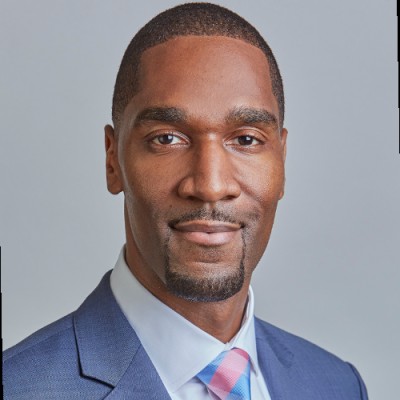
Kevin Simmonds
Partner on AI Offensive Security, PWC
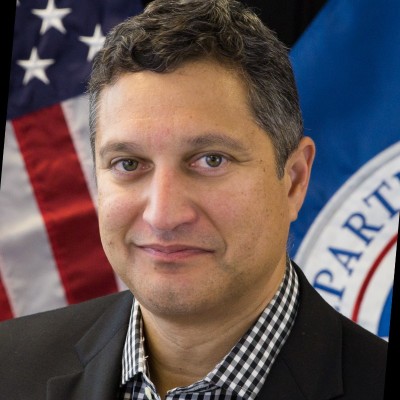
Martin Stanley
NIST AI RMF Lead, Independent

Omar A. Turner
General Manager of Security, Microsoft
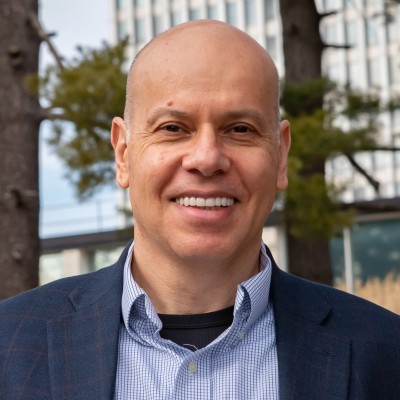
Apostol Vassilev
AI Research Team Supervisor, NIST

Matthew Versaggi
AI Fellow, White House Presidential Innovation Fellow
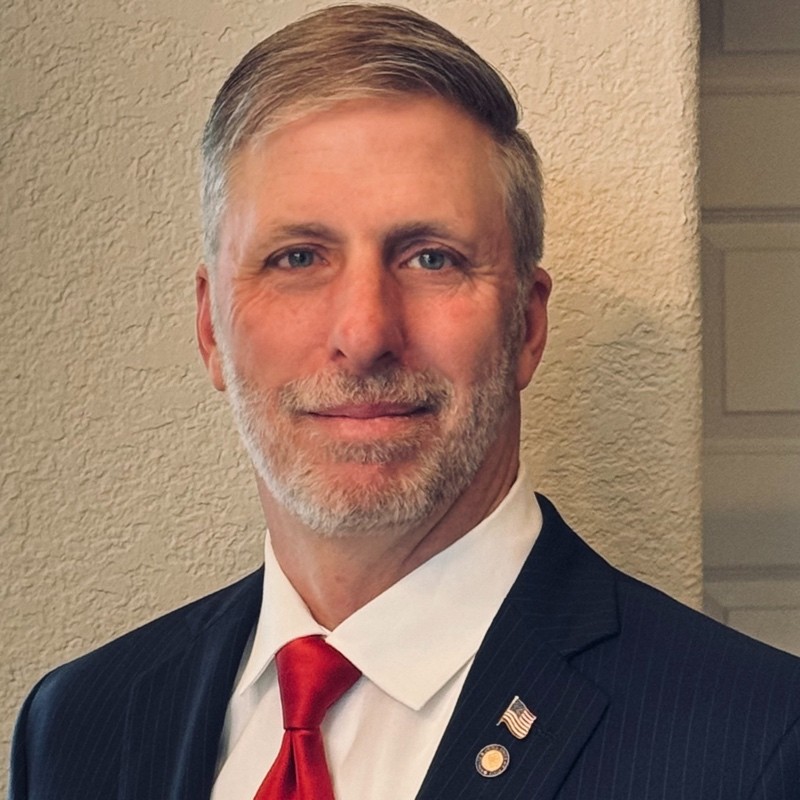
David Webb
Agency Cybersecurity Officer, Cybersecurity and Infrastructure Security Agency
Dennis Xu
Research VP, AI, Gartner

Xiaochen Zhang
Executive Director and Chief Responsible AI Officer, AI 2030
Recognition
We extend our gratitude to all founding members who have contributed to establishing this crucial framework for AI security assessment. Their vision and dedication have been instrumental in shaping the Agentic Skills Top 10 project.
Get Involved
Interested in contributing to the Agentic Skills Top 10 project? We welcome new contributors and leaders. Please see our Contribution Guidelines for more information on how to get involved.