WSTG - Latest
Test User Registration Process
| ID |
|---|
| WSTG-IDNT-02 |
Summary
Some websites offer a user registration process that automates (or semi-automates) the provisioning of system access to users. The identity requirements for access vary from positive identification to none at all, depending on the security requirements of the system. Many public applications completely automate the registration and provisioning process because the size of the user base makes it impossible to manage manually. However, many corporate applications will provision users manually, so this test case may not apply.
Test Objectives
- Verify that the identity requirements for user registration are aligned with business and security requirements.
- Validate the registration process.
How to Test
Verify that the identity requirements for user registration are aligned with business and security requirements:
- Can anyone register for access?
- Are registrations vetted by a human prior to provisioning, or are they automatically granted if the criteria are met?
- Can the same person or identity register multiple times?
- Can users register for different roles or permissions?
- What proof of identity is required for a registration to be successful?
- Are registered identities verified?
Validate the registration process:
- Can identity information be easily forged or faked?
- Can the exchange of identity information be manipulated during registration?
Example
In the WordPress example below, the only identification requirement is an email address that is accessible to the registrant.
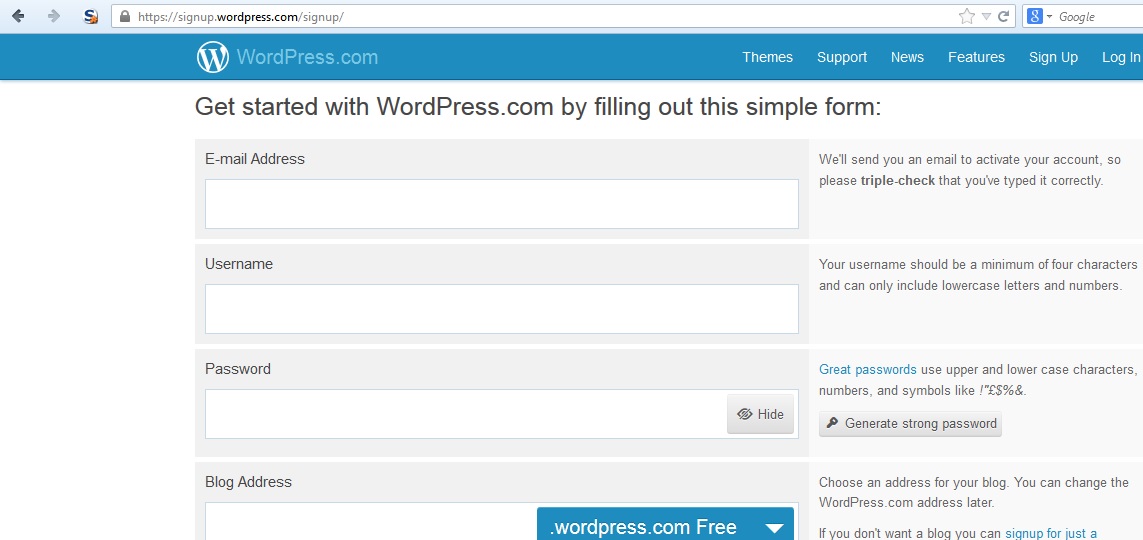
Figure 4.3.2-1: WordPress Registration Page
In contrast, in the Google example below the identification requirements include name, date of birth, country, mobile phone number, email address and CAPTCHA response. While only two of these can be verified (email address and mobile number), the identification requirements are stricter than WordPress.
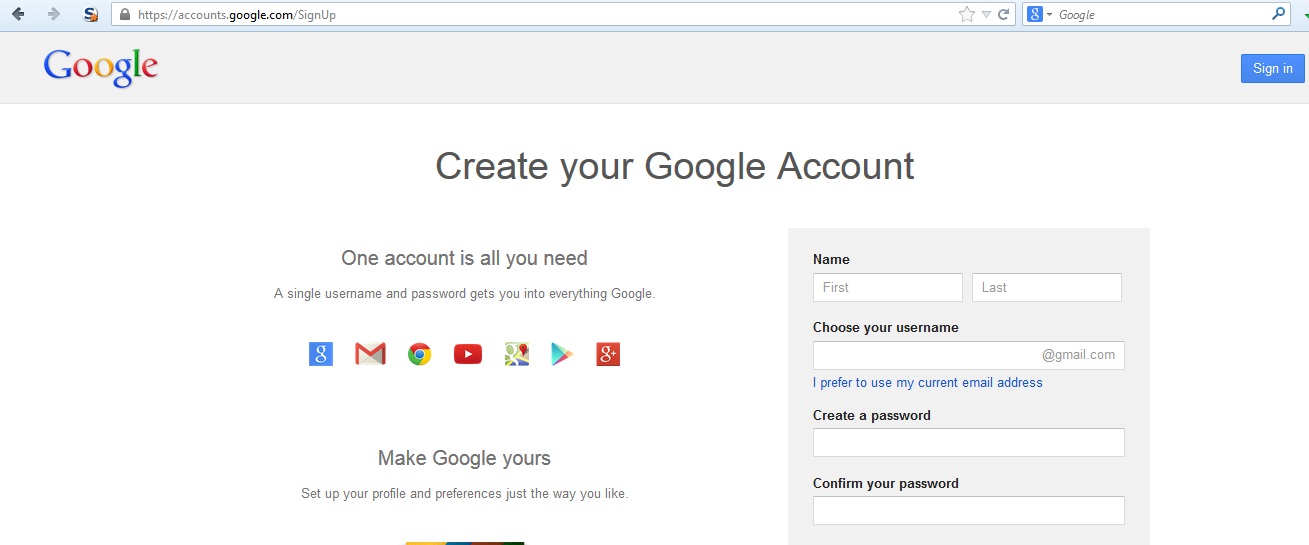
Figure 4.3.2-2: Google Registration Page
Some applications may also automatically grant privileged roles to users when they register an account with an email address from a trusted domain. If ownership of the email address is not validated as part of the registration process, this could allow an attacker to gain access to a privileged account by registering a new user on that domain.
Alternatively, if they only perform partial matching of the domain then it may be possible to register a privileged account using other similar domains. For example, if the application checks for email addresses ending in example.org then it may be possible to use the notexample.org domain; or if it checks for @example.org in the email address then it may be possible to use @example.org.attacker.com.
Remediation
Implement identification and verification requirements that correspond to the security requirements of the information the credentials protect.
Tools
A HTTP proxy can be a useful tool to test this control.